

A severe collision alters the structural geometry of a modern vehicle in ways that the human eye cannot detect on the street. While crushed bumpers and shattered headlamps command immediate attention, the internal stresses absorbed by the chassis, subframe, and suspension create complex hazards that require methodical intervention. When a damaged automobile enters a dedicated car collision center shop, the initial diagnostic evaluation determines the entire trajectory of the repair lifecycle. Certified technicians begin by stripping away fractured exterior trim, bumper covers, and inner splash shields to expose the underlying architecture. They examine the unibody crumple zones to verify whether impact forces dissipated as engineered by the manufacturer, or if kinetic energy traveled deeper into the passenger cell.
Modern vehicles rely on ultra-high-strength steels and tailored blanks designed to deform progressively during an accident. When these metals buckle, they alter critical suspension mounting points, drivetrain alignment angles, and electronic sensor brackets. Technicians mount the vehicle onto specialized computerized measuring platforms that reference factory specifications within millimeter tolerances. Laser scanners and ultrasonic probes capture real-time coordinate data from dozens of reference points beneath the vehicle floor. This structural baseline reveals whether the frame rails have shifted laterally, buckled vertically, or twisted along the central axis, laying the groundwork for every mechanical and cosmetic operation that follows. Skipping a comprehensive digital frame check can leave structural distortion hidden beneath shiny new bodywork.
Structural Realignment and Frame Laser Measurement
Once the computerized diagnostic scan maps the structural deviations, hydraulic pulling towers restore the structural steel back to factory specifications. This rigorous phase requires an experienced auto body repair service that understands the metallurgical limitations of advanced high-strength alloys. Technicians anchor the vehicle rigidly to a heavy-duty frame bench before attaching multiple pulling clamps to strategic tie-down points. Controlled hydraulic pressure reverses the collision stresses, easing bent frame horns, inner wheelhouses, and structural pillars back into original three-dimensional coordinates.
Pulling too rapidly or applying torch heat incorrectly can destroy the temper of high-strength steel, rendering the vehicle dangerously brittle during any subsequent accident. Technicians cross-reference the live laser scanner feed throughout every incremental pull to monitor metal spring-back and maintain exact symmetry. In instances where internal structural pillars or frame rails have torn or sustained severe stress fractures, cold-worked metal must be surgically excised along approved factory cut lines. Technicians weld new original-equipment structural components in place using specialized squeeze-type resistance spot welders that mirror factory assembly plants. This meticulous structural calibration ensures that door openings, hood latches, and structural glass channels seat cleanly without binding or leaking under road stress.
Exterior Panel Replacement and Metallurgical Standards

After technicians confirm that the underlying chassis aligns perfectly with factory tolerance tables, attention shifts toward the exterior sheet metal and composite closure panels. A qualified auto body shop carefully balances structural safety with aerodynamic aesthetics during this reconstruction phase. Fenders, door shells, trunk lids, and composite front splitters are dry-fitted before paint application to verify consistent panel gaps and bodyline contours. Uneven panel seams do not merely look unappealing. They create wind noise, accelerate water intrusion, and induce premature latch wear across everyday driving conditions.
Technicians adjust hinges, strike plates, and guide pins to ensure that every closure operates with crisp mechanical precision. While bolt-on components allow for direct replacement, quarter panels and roof skins often require structural bonding adhesives, rivets, or laser-guided welding techniques. Modern vehicle designs incorporate lightweight aluminum panels adjacent to traditional steel stampings, which demands strict environmental isolation to prevent galvanic corrosion. Dedicated repair facilities maintain specialized clean rooms and non-ferrous hand tools specifically for aluminum shaping. Once every external component aligns seamlessly with surrounding bodywork, technicians seal factory seam joints with specialized urethane caulks that prevent moisture from infiltrating concealed cavities. Ensuring that mounting brackets sit dead straight prevents annoying highway rattles.
Undercarriage Diagnostics and Exhaust System Integrity
Underbody collision energy frequently travels beyond the structural unibody, impacting exhaust components and drivetrain assemblies suspended beneath the floor pan. During high-energy impacts, the rigid exhaust piping can shift violently on its rubber isolation mounts, stressing the engine manifold, flexible downpipes, and sensitive emissions hardware. Technicians conduct exhaustive underbody visual inspections and backpressure tests to confirm that the internal ceramic substrate within the catatylic converter has not fractured into loose fragments. An impact strong enough to bend lower control arms or scrape crossmembers often sends shockwaves directly into the exhaust tract, causing brittle honeycomb precious-metal matrices to shatter internally.
A broken ceramic brick rapidly restricts exhaust gas flow, spiking engine operating temperatures and triggering persistent powertrain trouble codes on the dashboard. Technicians inspect oxygen sensor bungs, heat shields, and welded flange seams for subtle hairline cracks that invite dangerous exhaust fumes into the passenger cabin. When physical deformation crushes exhaust tubing, replacement sections must be bent and welded without creating turbulent restrictions. By catching exhaust displacement and substrate fracturing early in the restoration process, mechanics avoid secondary engine damage and prevent unexpected emissions test failures later down the road. If impact force bent the transmission crossmember or exhaust brackets upward, road vibrations will resonate loudly into the passenger floorboards.
Suspension Geometry and Steering Calibration Protocols
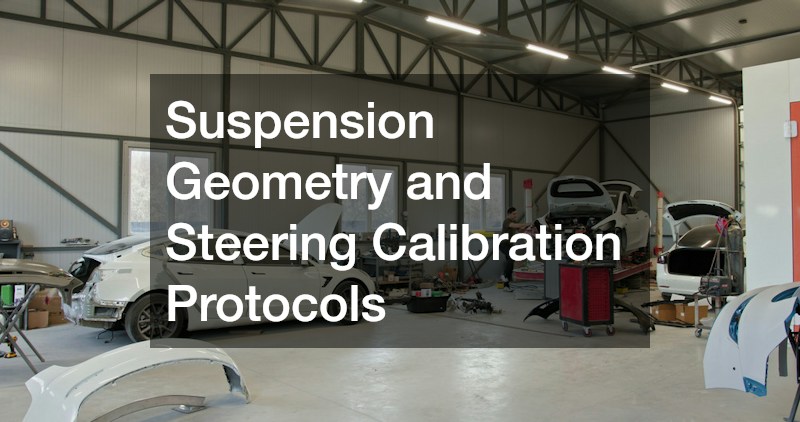
Restoring the mechanical suspension system to factory geometry represents an essential safety benchmark following an accident. Side impacts, curb strikes, and severe front-end collisions routinely twist lower control arms, deflect tie rods, and bend MacPherson strut assemblies. Technicians must conduct a comprehensive four-wheel wheel alignment using multi-sensor digital alignment racks to evaluate camber, caster, toe, and thrust angles. When suspension angles deviate even half a degree from manufacturer specifications, tires experience accelerated, uneven tread wear, and directional stability deteriorates at highway speeds.
Contemporary vehicles integrate steering angle sensors directly into advanced driver assistance systems, electronic stability control, and lane-keep assist modules. If the mechanical steering axis does not correlate precisely with zero-degree steering wheel positioning, automated driving computers miscalculate vehicle trajectory and may intervene erratically during regular driving. Technicians inspect steering racks, knuckle assemblies, and sway bar end links for micro-fractures before locking in final alignment specs. Advanced steering calibration extends beyond physical tie rod adjustments to include dynamic road tests with real-time telemetry logging. By ensuring that every wheel tracks parallel to the vehicle centerline, technicians eliminate unwanted steering pull and restore factory road handling.
Heating and Refrigeration Circuit Restoration
Frontal impacts frequently compromise the vehicle cooling pack, creating secondary heating and ventilation failures that require specialized diagnostic tooling. A front bumper deformation often pushes the aluminum condenser directly into the engine radiator, causing micro-fractures in aluminum tubing and bent cooling fins. When a vehicle exhibits an auto ac problem following a collision, certified technicians hook up digital manifold gauges to verify static and dynamic refrigerant pressures. Even if the external air conditioning lines appear undamaged, physical impact shock can crack the compressor mounting ears or dislodge internal expansion valves.
Technicians recover any remaining refrigerant, pull a deep vacuum on the sealed refrigeration circuit, and monitor micron gauges for signs of slow system decay. If moisture or ambient air penetrates a ruptured air conditioning line, internal lubricants quickly degrade, causing catastrophic compressor lockup once the system restarts. Replacing damaged condensers, desiccant receiver-driers, and high-pressure service ports restores proper thermal regulation to the cabin. Technicians also replace the cabin microfilter and flush the evaporator core to eliminate any stale odor or fine debris kicked up during the impact. This attention to detail guarantees that windshield defrosters and passenger climate controls perform reliably in extreme summer heat and winter freezes alike.
Non-Invasive Dent Removal and Preserving Factory Paint
Not every exterior imperfection following a collision warrants aggressive grinding, plastic filler, and traditional spray-booth paint application. When hail stones, low-speed parking lot nudges, or falling tree branches dent sheet metal without cracking the clear coat, technicians utilize paintless dent repair to restore panel integrity. This specialized craft uses precision metal rods, custom lighting arrays, and reflective line boards to manipulate metal from the reverse side of the panel. By reading reflections across the curved sheet metal, skilled technicians massage high spots and lift depressions back to their original factory contours.
Because this technique avoids harsh sanding, body filler putty, and mismatched aftermarket paint, it preserves the factory-baked primer and clear coat intact. Preserving original paint keeps corrosion resistance at manufacturer standards and protects long-term vehicle resale values. Technicians access interior panel cavities through existing window slots, wiring grommets, and removed interior trim liners. In closed cavities where traditional access remains blocked, technicians employ specialized glue-pulling tabs applied directly to exterior paint surfaces to lift dents outward without scratching the finish. This non-invasive method also significantly cuts repair turnaround times, often returning vehicles to roadworthy condition in hours rather than weeks.
Mechanical System Reassembly and Diagnostic Verification
While major collision repairs focus heavily on sheet metal and frame straightening, comprehensive vehicle restoration requires an integrated partnership with a reputable local auto repair facility. Modern automobiles are intricate computers on wheels, housing dozens of electronic control modules linked across high-speed controller area network buses. Mechanical technicians connect diagnostic scan tools to clear pending fault codes, recalibrate yaw rate sensors, and verify that the engine and transmission operate within safe parameters.
After severe impacts, engine mounts, transmission subframe isolators, and driveshaft carrier bearings can crack or shift under rapid deceleration. Technicians inspect wiring harnesses for pinched insulation and test cooling fans to prevent unexpected overheating during real-world driving. Safety restraint systems also demand thorough validation. Seatbelt pretensioners, airbag control computers, and passenger occupancy sensors must be tested and certified prior to vehicle release. In addition, brake line pressures, antilock braking sensors, and electronic parking brake actuators undergo complete digital cycling. Combining specialized structural sheet metal work with rigorous mechanical troubleshooting ensures that the repaired vehicle drives with the same refinement, reliability, and mechanical peace of mind it possessed before the collision occurred.
Surface Preparation and Protective Exterior Finishes

Once structural and mechanical assemblies pass rigorous road tests and electronic validations, attention turns toward final exterior refinishing and aesthetic branding. When commercial fleets or customized passenger vehicles sustain body damage, standard paint work must integrate smoothly with specialized vehicle wraps. Technicians prepare newly cleared panels by meticulously removing sanding dust, residual polishing oils, and microscopic contaminants before applying high-performance cast vinyl films. Applying vinyl over uncured paint or imperfectly leveled body seams creates bubbling, premature edge lifting, and unattractive surface distortion.
Master vinyl installers use temperature-controlled heat guns, digital surface thermometers, and precision squeegees to stretch and post-heat vinyl across complex body contours, deep bumper recesses, and sharp fender lines. For commercial vehicles featuring corporate logos and marketing designs, graphic designers digitally match color swatches and scale decals so the newly repaired section blends seamlessly with surviving factory graphics. Installers also inspect the underlying paintwork under multi-spectrum inspection lamps to ensure no solvent pop or orange peel texture telegraphs through the film. High-grade exterior vinyl acts as an effective secondary barrier against road salt, rock chips, and harsh ultraviolet sunlight, maintaining vehicle aesthetics long after collision repairs conclude.
Post-Repair Clear Coat Protection and Long-Term Curing
The final chapter of the vehicle restoration journey centers on long-term paint protection, post-repair cleaning, and clear coat curing management. Freshly sprayed automotive clear coats require between thirty and sixty days to outgas residual solvents, during which time the finish remains vulnerable to chemical staining and abrasive swirl marks. Professional detailers advise owners to exclusively hand wash car exteriors during this delicate curing period, strictly avoiding harsh mechanical brush tunnels and high-pressure commercial spray wands.
A gentle two-bucket wash method utilizing pH-neutral automotive shampoo, plush microfiber mitts, and clean grit guards eliminates abrasive dirt particles without marring soft clear coat layers. Technicians gently sheet water across panels rather than applying high-velocity blast drying, finishing the drying process with ultra-soft waffle-weave microfiber towels. Owners should abstain from applying heavy carnauba waxes, synthetic paint sealants, or ceramic coatings until the paint manufacturer curing timeline elapses completely. Routine post-repair inspections scheduled two to four weeks after delivery allow technicians to verify that exterior clear coats cured evenly across all repaired panels. Following these conservative cleaning protocols preserves deep gloss, prevents surface micro-scratches, and ensures the finished vehicle looks showroom fresh for years into the future.
